





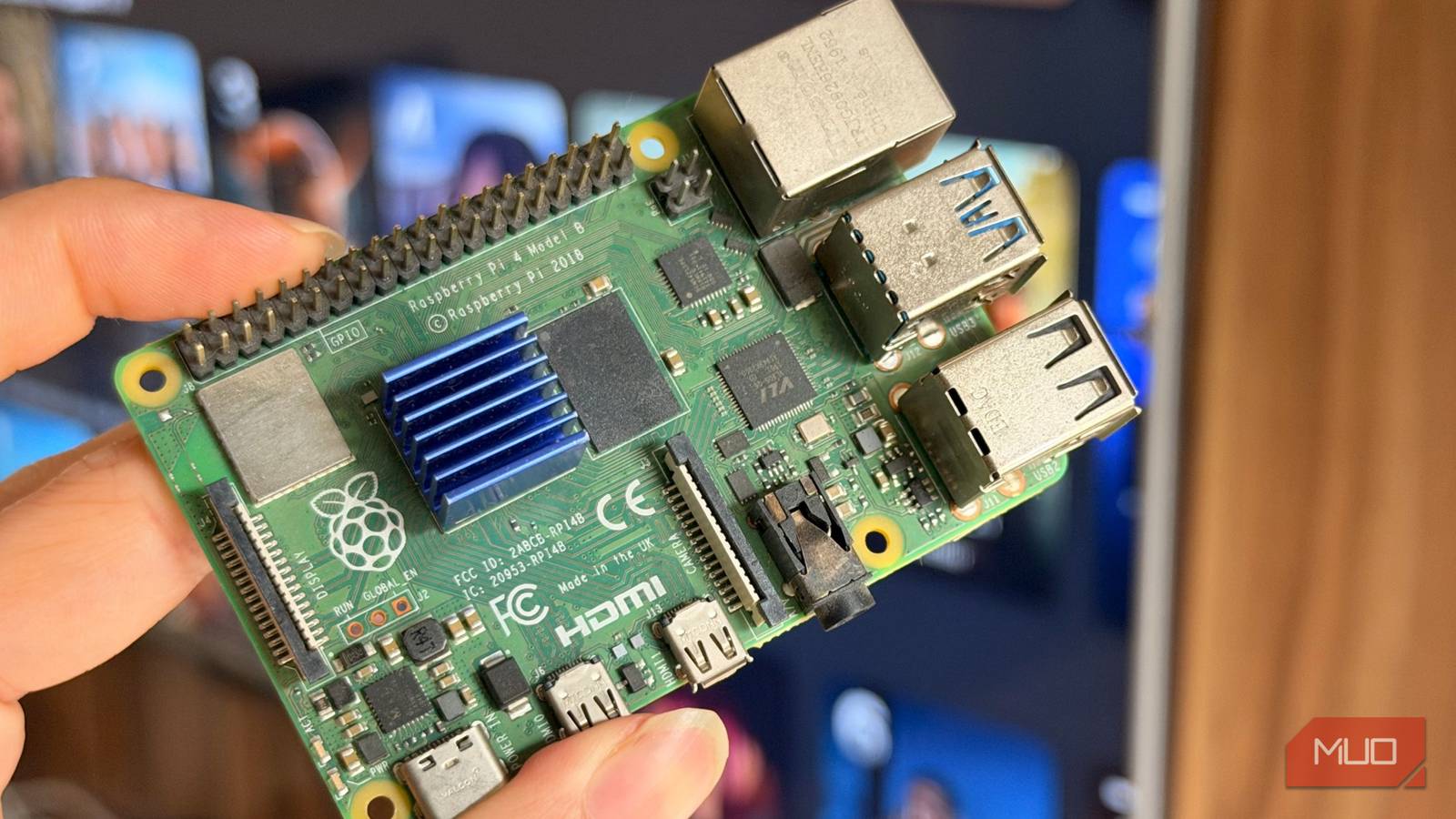
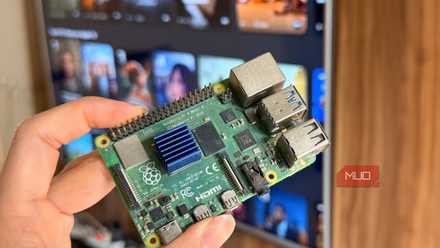
The Raspberry Pi has always been the go-to single board computer (SBC) for hobbyists, makers, and tinkerers—and for good reason. It’s well documented, has a large community, and runs a polished OS out of the box. The problem is that it’s not exactly cheap anymore, and you might be able to ditch the Raspberry Pi without regrets.
Thanks to the constant increase in prices of LPDDR4 memory, Raspberry Pi is quickly increasing the prices of its lineup several times. If you’re looking to pick one up today, the 8GB variant alone can cost up to $200. The 4GB variant, which is said to be the sensible budget option, is selling for over $100 at retailers. Cheap ain’t what it used to be, and it might be time to start looking at some actually cheaper alternatives.
7 projects for your new 16GB Raspberry Pi 5
Put your new, super-powerful Raspberry Pi 5 to good use.
Orange Pie Zero 3
Why the Orange Pi Zero 3 delivers more than its price.

If you want to keep things seriously affordable without sacrificing too much performance, the Orange Pie Zero 3 is hard to beat. The 4GB RAM version costs around $30 to $40 depending on where you buy it, which is less than half the price of the Raspberry Pi 4 (4GB).
For your money, you get an Allwinner H618 quad-core Cortex-A53 processor clocked at 1.5GHz, up to 4GB of LPDDR4 memory, built-in Wi-Fi 5 and Bluetooth 5.0, and Gigabit Ethernet. It also outputs micro-HDMI at 4K 60FPS. The only major trade-offs are that you’re stuck with USB 2.0 ports and software support that, while functional, leans more towards Debian and Ubuntu without that polished Raspberry Pi experience.
However, if you’re working fast with Linux, software support shouldn’t be too much of an issue. Regardless, if your use case is a lightweight home server, a Pi-hole DNS sinkhole, or a small automation hub, this board does the job at a fraction of the price.

- Brand
-
Orange Pie
- CPU
-
All Winner H618
- Memory
-
Up to 4GB LPDDR4
- Operating system
-
Android, Ubuntu, Debian
The Orange Pi Zero 3 is a compact, low-cost single-board computer powered by an Allwinner H618 processor, offering Wi-Fi, Bluetooth, Gigabit Ethernet, and enough performance for home servers, networking projects, and lightweight Linux workloads.
Orange Pie 3B
What makes the Orange Pi 3B such a compelling all-rounder?
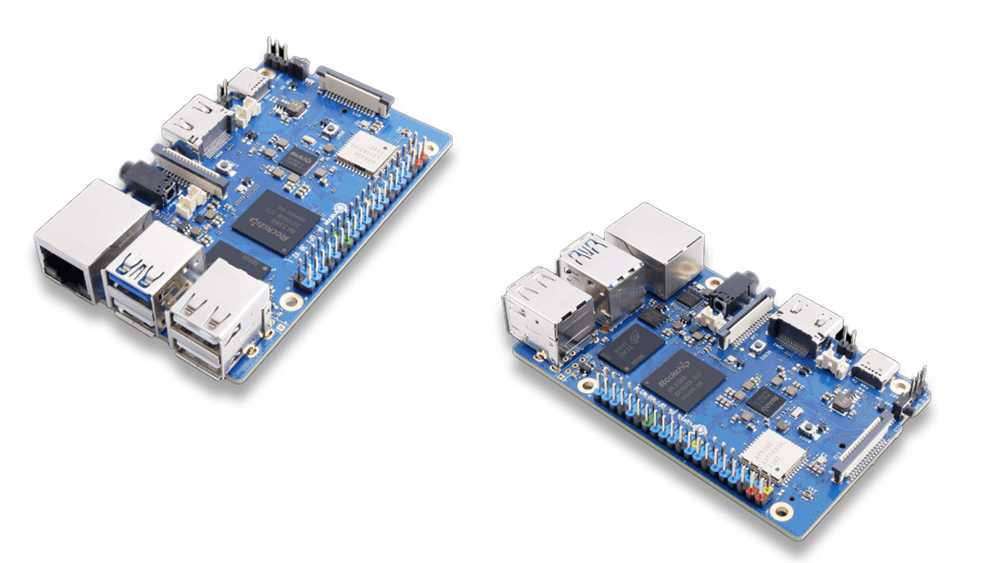
The Orange Pi 3B makes a very compelling case for a Raspberry Pi 4 replacement. It starts at around $30 for the 2GB model and $40 for the 4GB model on AliExpress, comes with a Rockchip RK3556 quad-core Cortex-A55 processor clocked at up to 1.8GHz, and an ARM Mali-G52 GPU. You even have a built-in NPU that provides 0.8 tops for light AI inference tasks.
However, what really sets this board apart from the competition is its M.2 M-Key slot that supports both SATA and PCIe NVMe SSDs. This means you can ditch the fast (and expensive) microSD cards and boot straight from an SSD, dramatically improving day-to-day performance. Throw in Wi-Fi 5, Bluetooth 5.0, Gigabit Ethernet, USB 3.0 ports, and a 40-pin GPIO header compatible with Raspberry Pi accessories, and you’ve got an alternative that checks off your every need at a very reasonable price.

- Brand
-
Orange Pie
- CPU
-
Rock chip RK3566
- Memory
-
2GB/4GB/8GB (LPDDR4/4X)
- Operating system
-
Orange Pi OS, Ubuntu, Debian, Android
The Orange Pi 3B is a versatile single-board computer powered by a Rockchip RK3566 processor, with Gigabit Ethernet, Wi-Fi, Bluetooth, NVMe SSD support, and plenty of performance for home labs, media servers, and general Linux projects.
Free computer le aloo
A budget board that refuses to die.
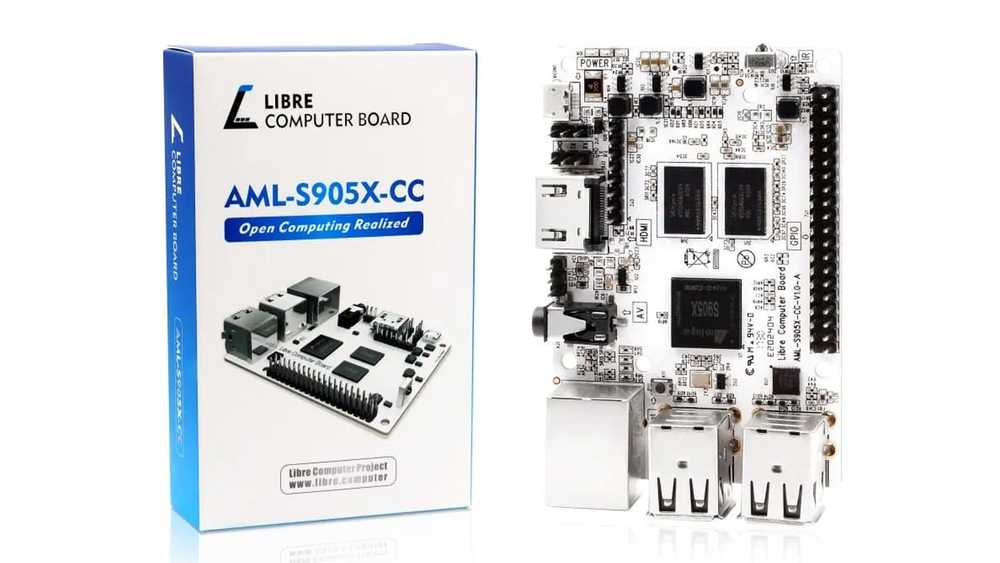
The Libre Computer AML-S90X-CC, also known as Le Potato, takes a different approach to SBCs. It’s designed to be as close as possible to a Raspberry Pi drop-in replacement, even sharing the same 86.9mm × 58.5mm form factor as the Raspberry Pi 2 and 3, and running Ubuntu and Android as well as the standard Raspberry Pi OS.
It is a bit weak from the hardware side, though. You get an Amlogic S905X quad-core Cortex-A52 processor clocked at 1.5 GHz, up to 2GB of RAM, and a penta-core GPU capable of 4K H.265 video decoding. At around $35 for the 2GB model, it’s much cheaper than the Raspberry Pi 4 and Pi 5 currently on the market. However, the biggest issue is the lack of onboard Wi-Fi and Bluetooth. Sure, you can plug in a USB dongle if wireless connectivity is important, but it really shines in a wired setup like a media server or light desktop.

- Brand
-
Free computer
- CPU
-
Amlogic S905X
- Memory
-
2GB 32-bit DDR3 SDRAM
- Operating system
-
Linux
The Libre Computer Le Potato is a budget-friendly single-board computer based on the Amlogic S905X processor, offering Raspberry Pi-compatible GPIO, 4K video output, and solid Linux support for media centers, home servers, and DIY projects.
Banana Pie BPI-M5
More power than most people need

The Banana Pi BPI-M5 is one of those boards that gets overlooked, when it shouldn’t. It’s powered by an Amlogic S905X3 quad-core Cortex-A55 clocked at 2.0GHz, comes with 4GB of LPDDR4 memory, and even has 16GB of eMMC storage on board. There are also four USB 3.0 ports and a Gigabit Ethernet port. Built-in eMMC provides a faster, more reliable storage option than microSD cards, without the need for potentially expensive NVMe drives.
Banana Pie, as a brand, has long had a solid online community and a reasonably well-maintained wiki. The BPI-M5 also runs well under Armbian and supports Android, making it quite useful in media center and digital signage scenarios. If you can find one in the $40 to $50 range, this is one of the oldest, most mature, and well-tested Raspberry Pi alternatives on the market.

- Brand
-
Banana Pie
- storage
-
4GB LPDDR4
- CPU
-
Amlogic S905X3
- Memory
-
4GB LPDDR4
The Banana Pi BPI-M5 is a powerful single-board computer built around the Amlogic S905X3 processor, with 4GB of RAM, Gigabit Ethernet, eMMC storage support, and plenty of performance for home servers, containers, and media applications.
The old Raspberry Pi is still intact.
Why the Raspberry Pi 3B+ Remains Amazingly Relevant
Finally, if you must have a Raspberry Pi, consider the Raspberry Pi 3B+—the final revision of the Pi 3 line and guaranteed to be in production until at least January 2030. You can usually find them on Amazon for around $40-$50, which is about half the price of its more expensive siblings.
The specs are modest, though. You get a quad-core Broadcom BCM2837B0 Cortex-A53 clocked at 1.4GHz, 1GB of RAM, dual-band 802.11ac Wi-Fi, Bluetooth 4.2, four USB 2.0 ports, and PoE support via a separate HAT. Only 1GB of memory is the real limiting factor here, as it complicates multitasking and rules out memory-intensive workloads. However, this $50 board can replace your entire smart home hub, and for projects like a Pi-hole, a basic home server, or even a backup computer, it’s perfectly serviceable.

- Brand
-
Raspberry Pie
- Memory
-
1 GB
The Raspberry Pi 3B+ is a compact single-board computer that features a quad-core ARM processor, Gigabit Ethernet, dual-band Wi-Fi, and Bluetooth, making it ideal for DIY, IoT, and home server projects.
Price is not the whole story.
Every third-party board on this list will require some degree of tinkering compared to a brand new Raspberry Pi. The biggest advantage of the Raspberry Pi was never the hardware, either, it was the excellent software support and documentation the community received from day one.
Raspberry Pi projects fail for the same three reasons, and none of them are what you might think.
It’s not PI – how we use it.
These alternatives trade off this ecosystem’s polish and ease of use for greater performance and lower cost. For most users comfortable with Linux and some experience, each board here is a legitimate, cost-effective alternative. Just make sure to pick the right one for your needs.