





Augustin Carstens, former General Manager of the Bank for International Settlements (BIS) and member of the International Advisory Board of the Global Finance and Technology Network, praised stablecoins for their potential to promote financial inclusion and innovation.
“I’ve come to appreciate what stablecoins can do for financial innovation, inclusion and lowering costs,” Carstens said during a welcome address at the Point Zero Forum on Tuesday. “We should try to create conditions where we can live with fiat money and stablecoins.”
The remarks reflect a softer stance on stablecoins than Carstens took during his time at the BIS, when he was among the most prominent crypto critics. In January 2022 speechHe said that stablecoins cannot act as “sound money” because issuers have incentives to invest reserve assets in a “risky manner” to generate profits.
In his last speech as BIS General Manager in June 2025, Carstens also warned That stablecoins can emerge as a source of liquidity risk and still fall short of three key tests for money to serve society.
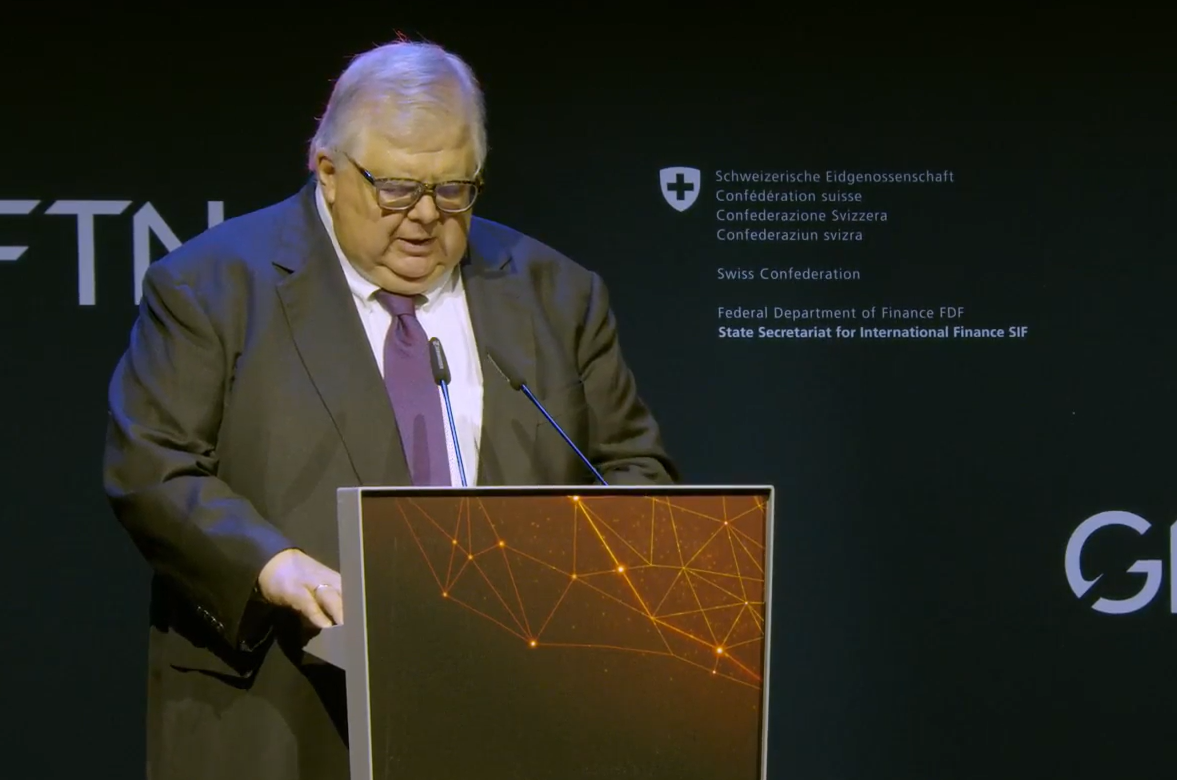
Augustin Carstens during a live-streamed welcome address at the Point Zero Forum. Source: Point Zero Forum
While Carstens has taken a more favorable view of stablecoins, current BIS officials have been critical of their role in the broader financial system.
Carstens’ successor and current BIS General Manager, Pablo Hernández de Cos, said in April that the stablecoin market remains “small” and that its structural features limit its ability to function as money.
Related: JP Morgan, Citi-backed clearinghouse plans tokenized deposit network in 2027: WSJ
BIS reiterated this view in a Preview In its annual economic report released on Tuesday ahead of 2026, it argued that current stablecoin designs lack key features that undermine confidence in the money and warned that widespread adoption could pose challenges to financial stability, bank funding and financial sovereignty.
However, the BIS endorsed bringing tokenization into the two-tier banking system, arguing that digital representation of assets could enable new forms of programmable finance while maintaining trust in money.
Stablecoins need global regulation to thrive.
Traditional financial systems can benefit from stablecoins, distributed ledger technology and tokenization, but a coherent global regulatory framework is needed to strengthen trust among stablecoin issuers, according to Carstens, who added:
“If we really want a global system where stablecoins can interact with global currency, it has to be a worldwide collaborative effort. And I see that behind it.”
More regulations and a level playing field for issuers could help stablecoins “flourish dramatically,” he said.
Several major jurisdictions have already introduced stablecoin-specific laws. The GENIUS Act created the first federal regulatory framework for payment stablecoins in the US. Signed into law in July 2025, it requires 100% of reserves to be held in high-quality liquid assets such as cash and short-term US Treasurys.
In the European Union, stablecoin issuers are regulated under the Markets in Crypto-Assets Regulation (MiCA). The framework requires issuers to obtain permission, publish an approved white paper, maintain full reserve backing and segregate reserve assets from company funds.
Magazine: Kraken’s $600 million stablecoin firm, Heaven scandal deepens: Asia Express